Nearly every homeowner has heard the same advice about marble kitchen countertops: seal the stone and move on. That advice is incomplete. Sealer helps reduce liquid absorption and staining, but it doesn't stop lemon juice, vinegar, wine, or acidic cleaners from etching the marble surface.
That distinction matters in a Cherry Hill kitchen. A veined slab can look extraordinary in a showroom, yet the right question isn't whether marble is “good” or “bad.” The right question is whether your household accepts visible patina, responds quickly to spills, protects vulnerable edges, and chooses a finish that suits the way the kitchen is used.
Table of Contents
- Why Marble Still Wins Hearts and Sparks Debates
- Understanding Marble as a Material
- The Honest Pros and Cons of Marble Countertops
- Marble Care and Sealing Done Right
- What Marble Countertops Cost and Why
- Marble Versus Granite, Quartz, and Porcelain
- Choosing Marble in South Jersey
- Final Thoughts on Marble Kitchen Countertops
Why Marble Still Wins Hearts and Sparks Debates
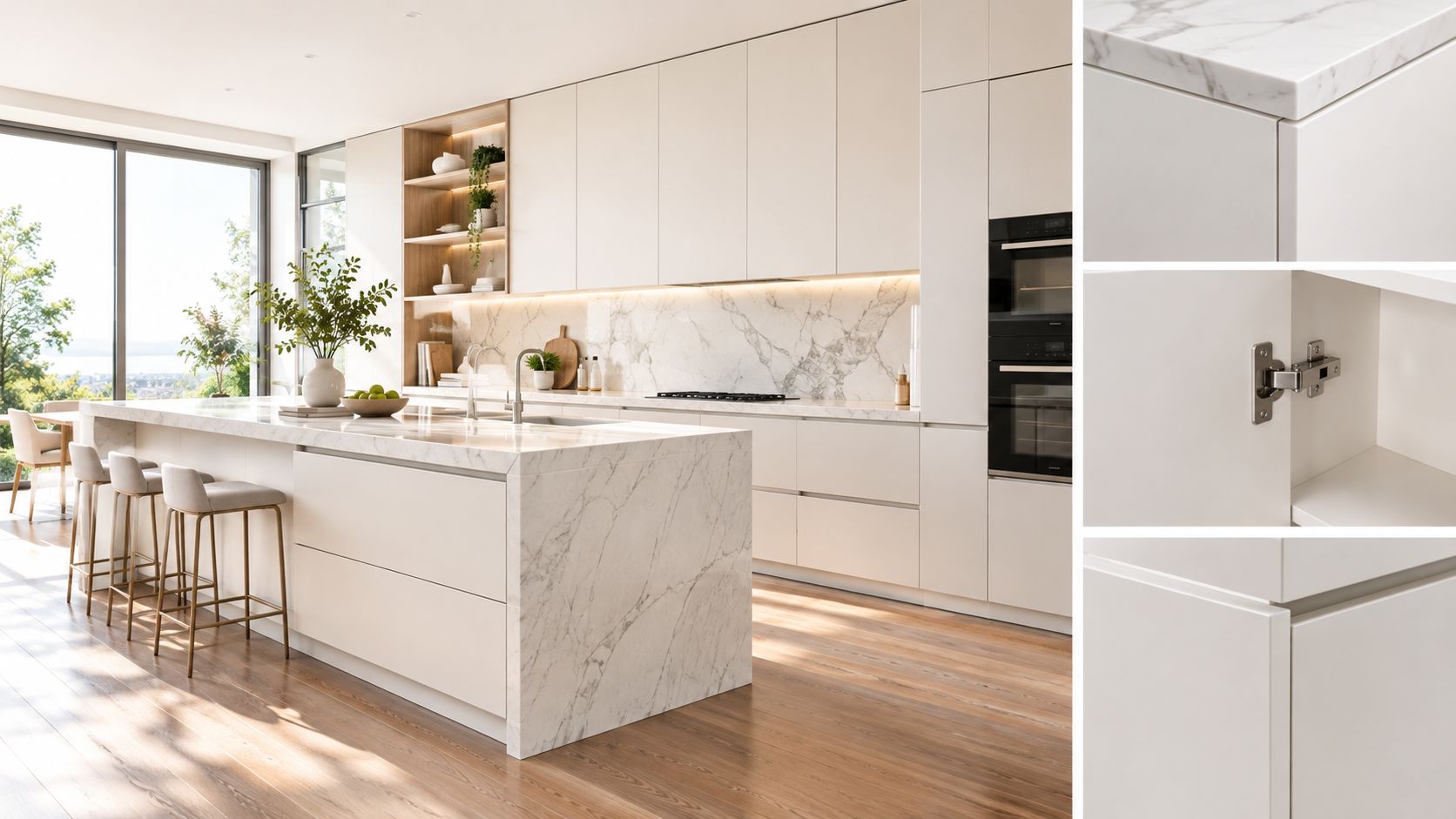
Marble has a quality that manufactured surfaces struggle to reproduce. Its veining moves through the slab with variation, depth, and irregularity. Two pieces from the same stone family can create noticeably different kitchens, which is exactly why homeowners often fall for a particular slab rather than a generic color.
That emotional response is legitimate. Marble has been used in architecture and decoration for more than 4,000 years, including major Greek and Roman building projects documented in the Oxford Research Encyclopedia discussion of marble. It isn't a short-lived trend that appeared because a showroom needed a new display.
The debate begins after installation. A homeowner sees a dull mark near the range, a faint ring beside the sink, or a chip at an exposed corner. One person says the stone wasn't sealed properly. Another says marble is too fragile for a kitchen. Both explanations may miss the actual issue.
The practical truth: Sealing manages absorption. It doesn't make marble acid-proof, scratch-proof, or impact-proof.
The showroom decision versus the lived-in kitchen
A polished slab can look perfect under showroom lighting. A real kitchen has citrus, tomato sauce, coffee, cookware, children, rushed cleanup, and guests who may not know which surface needs protection. Those daily conditions determine whether marble feels elegant or exhausting.
I've seen homeowners appreciate etching because it gives the stone an older, collected character. I've also seen households become frustrated because they expected the countertop to look exactly as it did on installation day. Neither reaction is wrong. The mistake is choosing marble without deciding which of those experiences you want.
This guide focuses on that decision. You'll learn what marble is, why its mineral composition creates both its beauty and its limitations, what sealing can and can't do, how fabrication affects performance, and when granite, quartz, or porcelain makes more sense. The goal is simple: choose marble because it fits your household, not because someone promised that a maintenance product will eliminate its personality.
Understanding Marble as a Material
Marble is a metamorphic carbonate rock. It forms when limestone or dolomite recrystallizes under intense heat and pressure. Its principal minerals are usually calcite or dolomite, and those minerals gather into tightly interlocking crystalline grains.
A useful comparison is a tray of sugar cubes pressed together until the separate cubes fuse into a dense mass. The finished material can be cut and polished, but the underlying chemistry remains important. Marble's crystalline structure helps explain why quality slabs can become durable interior surfaces, while its carbonate composition explains why acids can react with the surface.
Why one marble slab behaves differently from another
The word “marble” describes a broad family of stones, not one uniform performance category. Varieties can differ in hardness, porosity, strength, veining, and resistance to staining. A dramatic slab may be the wrong choice for a heavily used island if its layout creates vulnerable narrow sections or if its finish makes every mark highly visible.
Look at the actual slab, not only a small sample. Ask the fabricator or designer to discuss:
- Veining direction: Does the pattern need bookmatching, and will the layout create seams through prominent movement?
- Surface finish: Will polished, honed, or leathered marble make everyday wear more or less noticeable?
- Cutout locations: Could a sink or cooktop opening leave a narrow strip or concentrated stress point?
- Intended use: Will the surface support serious baking, quick family meals, frequent entertaining, or mostly light preparation?
- Care expectations: Are you comfortable using cutting boards, trivets, and pH-neutral cleaners every day?
For a practical overview of how countertop decisions connect with layout, maintenance, and design priorities, review this guide on how to choose kitchen countertops. A reputable natural-stone resource such as Excellent Home Improvement marble can also help homeowners become familiar with the visual range of marble before they visit a slab yard.
A material with a long working history
Marble has been used in the eastern Mediterranean since at least the 3rd millennium BCE, and Greek quarrying techniques were well established by approximately 500 BCE. Marble from Mount Pentelikon supported the construction of the Parthenon and other monuments during the 5th century BCE, while Roman building activity after 31 BCE expanded its use across the Mediterranean. Those dates and applications don't guarantee that every modern slab will suit every kitchen, but they do establish marble as a proven architectural material with a deep record of quarrying, fabrication, polishing, and use.
That history is reassuring for buyers who want a natural surface with genuine material identity. It also reinforces the central point: marble isn't a disposable decorative coating. You're selecting a mineral surface whose strengths and reactions are part of the package.
The Honest Pros and Cons of Marble Countertops
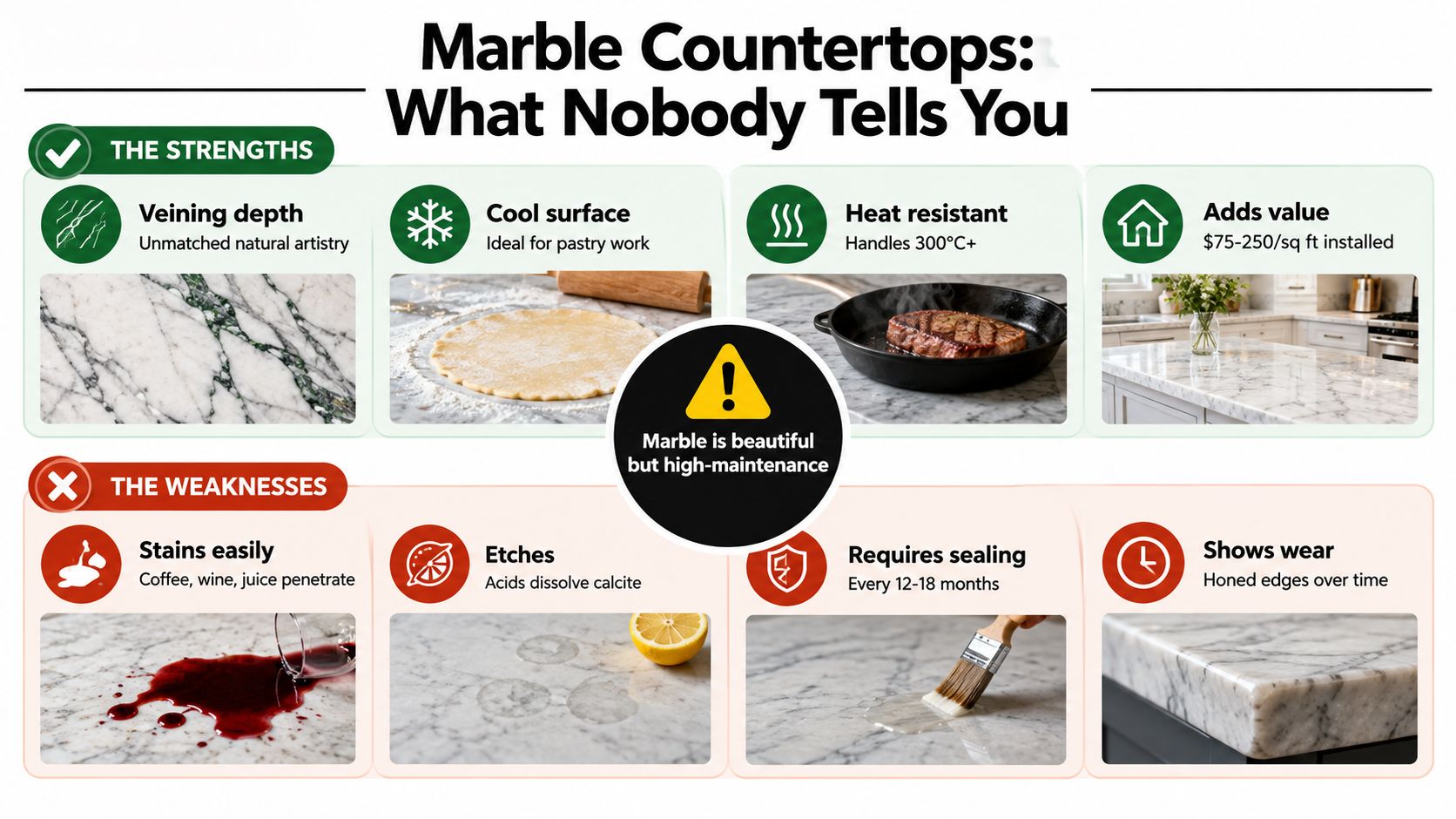
Marble's strongest advantage is visual. No two slabs have exactly the same veining, and the pattern often has a depth that printed or engineered surfaces can imitate without fully reproducing. For homeowners designing a kitchen around a sculptural island, that difference can justify choosing marble.
The surface also feels naturally cool, which appeals to people who roll dough or work with pastry. Marble handles normal kitchen heat well, but heat tolerance doesn't mean the stone is immune to every form of damage. Trivets remain a sensible habit, especially beneath hot cookware that could create a concentrated thermal or impact event.
Marble can also age attractively. A honed surface with gradual marks may develop the relaxed patina many homeowners want in an older South Jersey home. That benefit only counts if you see changing appearance as character rather than failure.
Where the performance trade-offs show up
Comparative testing using recognized European methods found that marble had the lowest impact and chemical resistance among the tested marble, granite, and composite quartz specimens. The same testing found that all tested specimens had water absorption below 0.5%, so plain water absorption wasn't the central weakness in that comparison. The practical implications are more specific than “marble is delicate.”
Cutting directly on marble can scratch the surface. A dropped pan can chip an edge or corner. A projecting section near a sink or cooktop can become a structural concern if the design leaves it unsupported. Proper substrate support, careful edge design, and protection during delivery and installation deserve attention.
Marble can work beautifully in a kitchen. It just shouldn't be fabricated as if it were an indestructible workbench.
The most important weaknesses are concentrated in three areas:
- Acid exposure: Acidic liquids and cleaners can etch calcium-carbonate marble, leaving a dull or matte depression.
- Impact exposure: Corners, exposed edges, narrow projections, and cutout areas need thoughtful support and handling.
- Abrasion exposure: Knives, abrasive powders, and careless cookware placement can mark the surface.
What the water-resistance result really means
Homeowners sometimes hear that low water absorption means a stone is nearly maintenance-free. That conclusion doesn't follow. Water and acid create different problems, and a sealer affects penetration rather than changing the mineral chemistry.
The finish changes the visual experience, too. Polished marble reflects light, so a small dull spot may stand out. Honed marble has a softer, less reflective appearance, which can make normal wear feel integrated into the surface. Leathered finishes add texture and may suit a homeowner who wants more visual variation, though the exact result depends on the slab and fabrication process.
This is why a sample alone isn't enough. View the whole slab, place it beside cabinetry and tile, and ask how the finish will look near the sink, range, seating areas, and frequently used prep zones.
Here's a concise explanation of how marble's surface responds to daily use:
Marble Care and Sealing Done Right
Etching is a chemical reaction, not a stain. An acidic liquid reacts with the calcium-carbonate surface and dissolves a microscopically thin layer. The result is a dull, matte depression that may look lighter or less reflective than the surrounding stone.
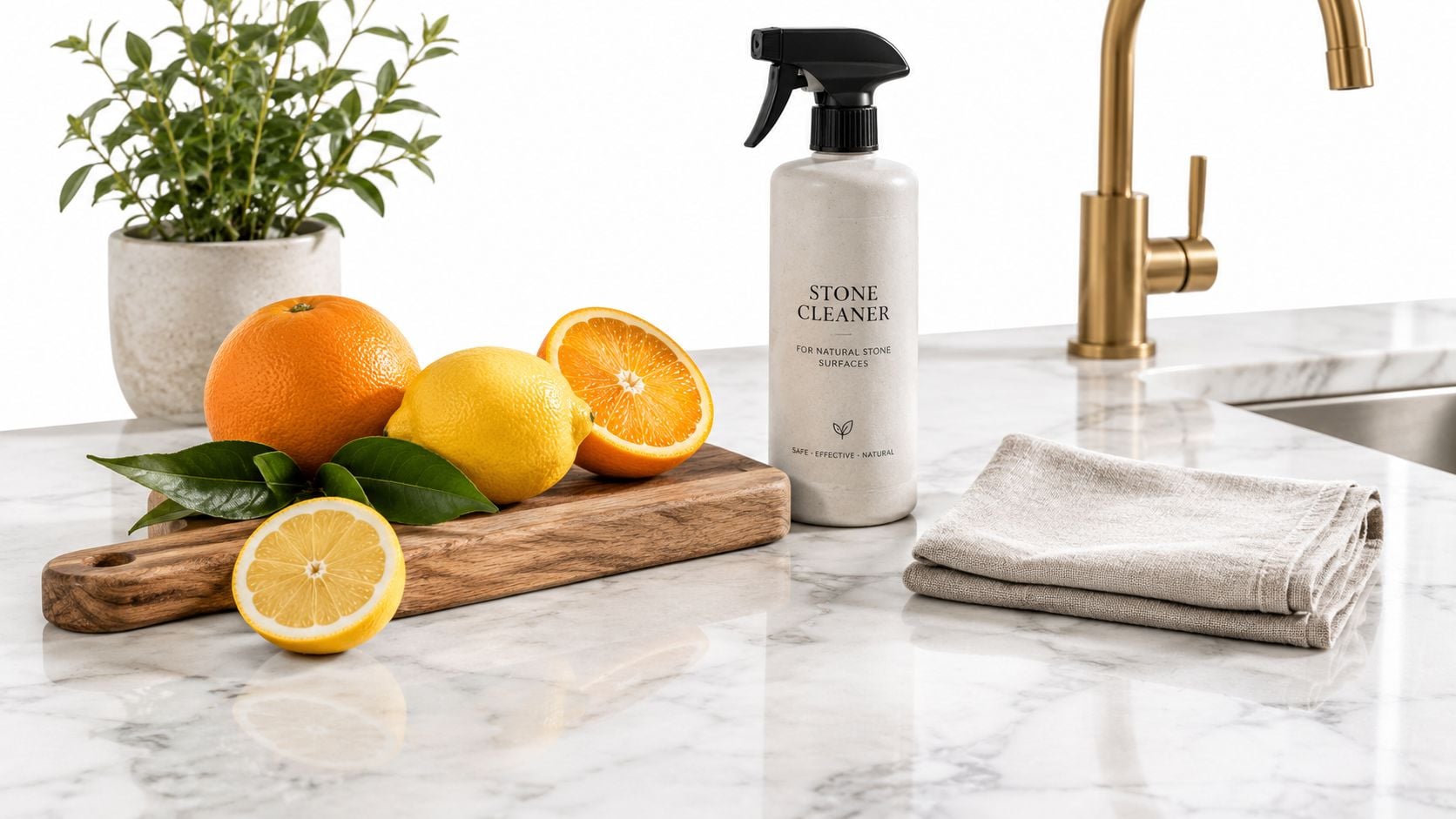
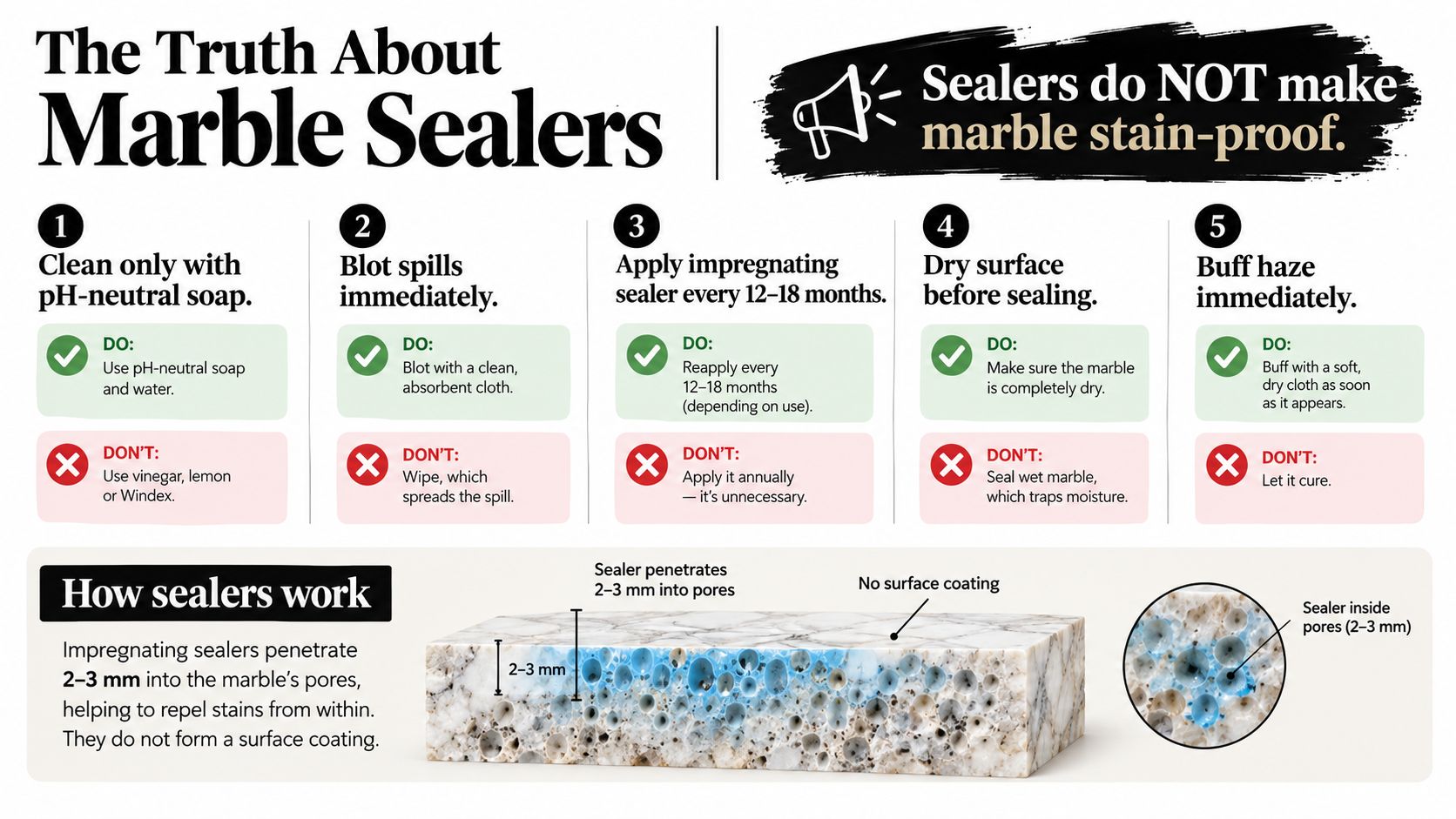
Common culprits include lemon juice, vinegar, wine, citrus, tomato, and acidic cleaning products. A sealed countertop can still etch because impregnating sealer reduces liquid penetration but doesn't chemically isolate the marble from acid.
A routine that protects the right things
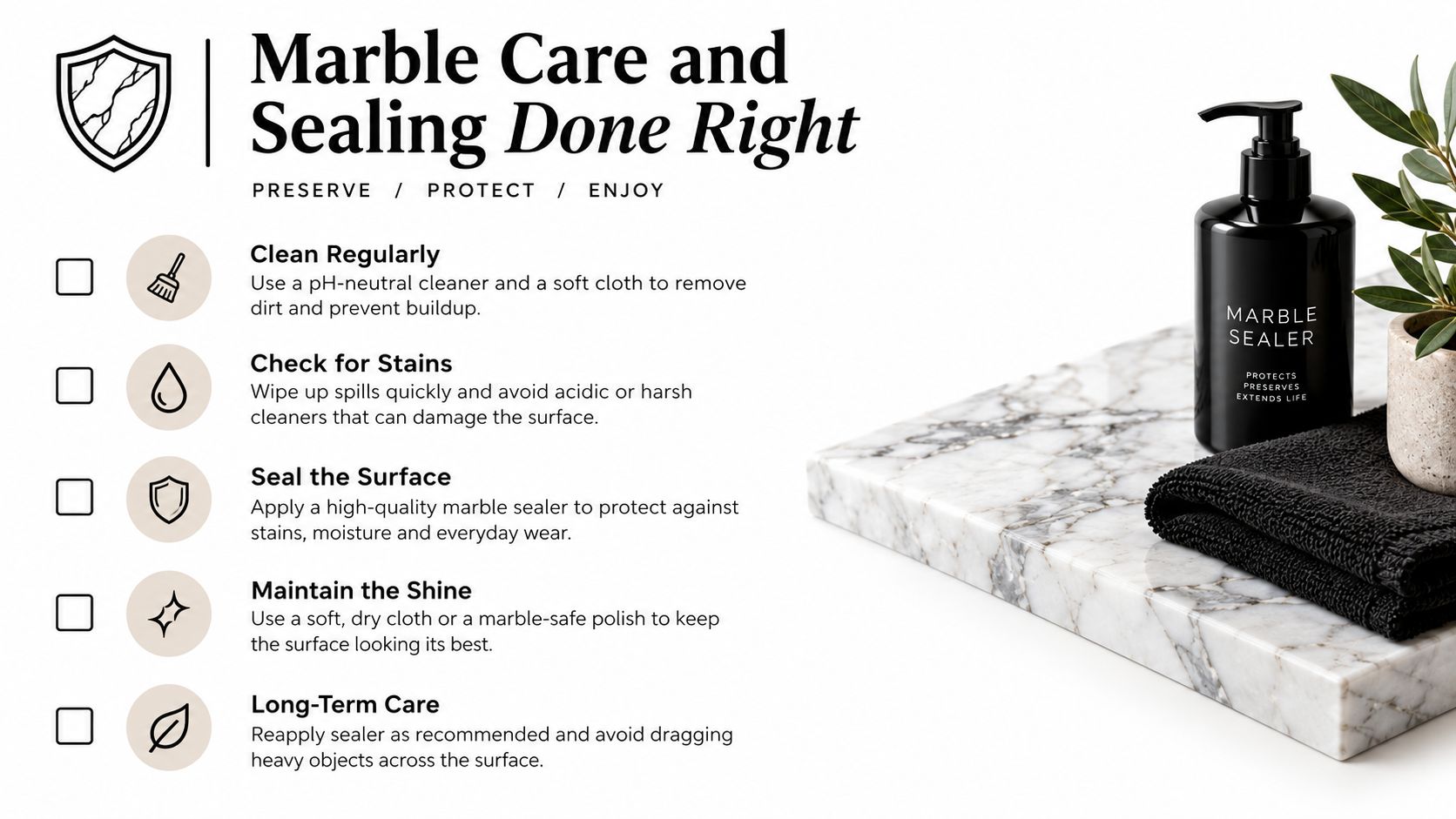
Use a pH-neutral stone cleaner for regular cleaning. Don't reach for vinegar because it's a familiar household solution. Don't use abrasive powders that can scratch the finish. For additional general guidance on marble maintenance, these Miami stone care tips offer a useful reminder that stone-care products should match the material.
Build the following habits into the kitchen:
- Blot spills immediately. Lift wine, citrus, tomato, and vinegar from the surface instead of letting them sit.
- Use cutting boards. Knives belong on a board, not directly on the countertop.
- Place trivets near cooking zones. Make protection convenient, especially beside the range and oven.
- Keep a suitable cleaner nearby. A pH-neutral product is more useful than a cabinet full of generic sprays.
- Treat sealer as stain management. Test absorption and follow the product and fabricator's guidance rather than assuming every countertop follows the same schedule.
If you're comparing stone terminology during a renovation, this explanation of what non-porous means can help clarify why absorption and chemical resistance aren't interchangeable concepts.
Choose a finish that fits your tolerance
Polished marble gives you the brightest reflection and often the strongest immediate visual impact. It also tends to reveal dull etch marks more clearly. Honed marble has a low-sheen surface that can make etching less conspicuous, while leathered marble provides texture and a more tactile appearance.
Neither honed nor leathered marble prevents acid damage. They change how wear appears. That distinction matters for a household that wants the stone to age gracefully rather than remain visually pristine.
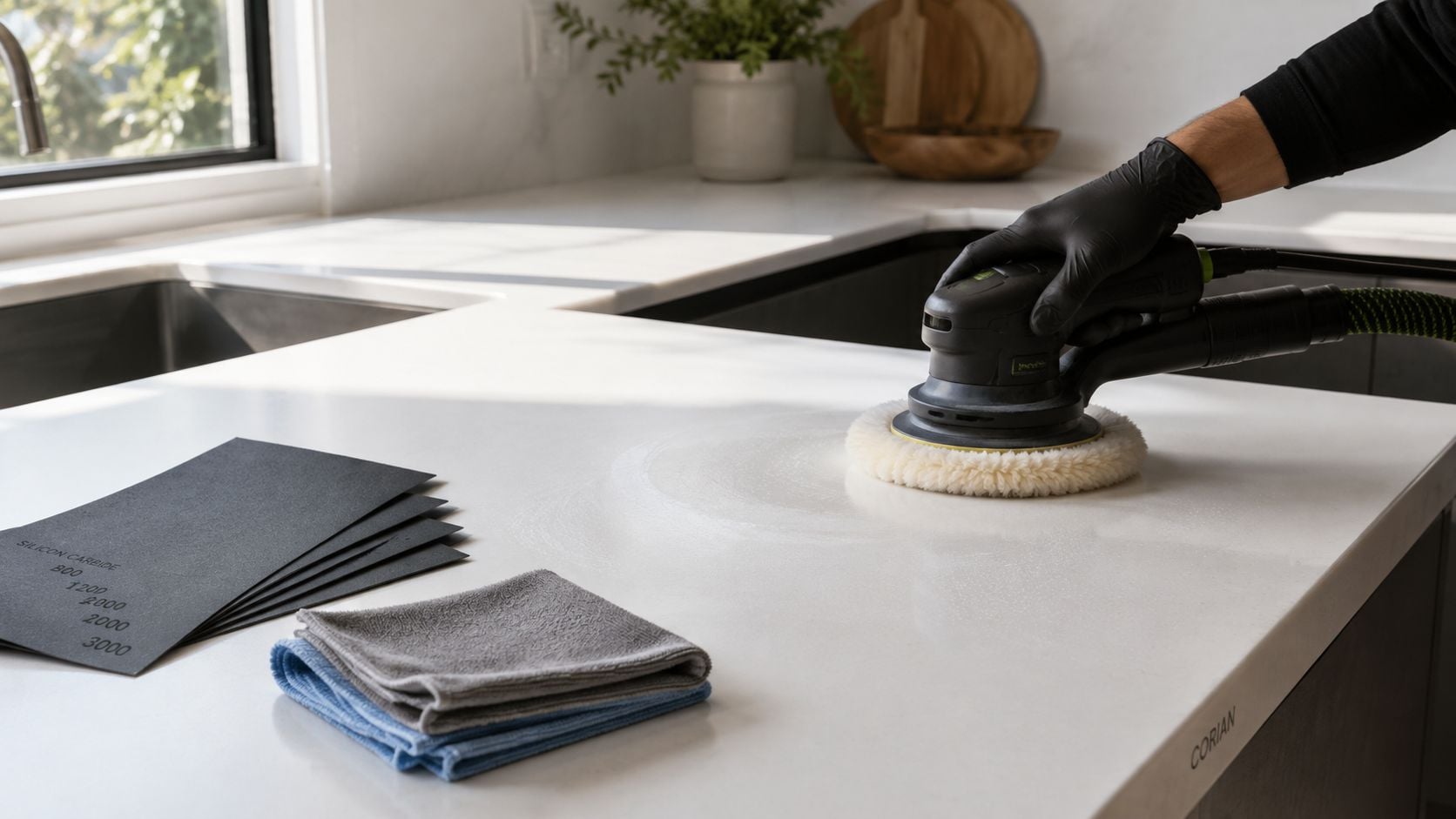
Cleaning removes surface grime. It doesn't erase established etching. A small mark may be acceptable as patina, but widespread or distracting damage may require professional honing or refinishing. Don't rely on a salesperson's promise that routine sealing will eliminate that possibility.
Design rule: Pick the finish before fabrication, and pick it with your future maintenance habits in mind.
What Marble Countertops Cost and Why
A marble quote reflects more than a slab's appearance. Availability begins with the broader stone market. U.S. producers sold or used approximately 2.3 million tons of dimension stone valued at $410 million in 2023, from 176 companies operating 224 quarries in 33 states, according to the U.S. Geological Survey dimension-stone summary. Marble represented a minority share of that market, while limestone accounted for about 51%, granite 20%, and sandstone 14% of dimension-stone volume.
The following year, estimated U.S. dimension-stone sales or use reached 2.2 million tons valued at $370 million, produced by 171 companies operating 216 quarries in 33 states, with marble included among the remaining stone categories. These figures don't establish a retail price for your kitchen. They show that marble occupies a more selective segment of a large natural-stone market, which can affect sourcing, availability, and lead time.
What your installer is actually pricing
The slab is only one line in a project estimate. Fabrication and installation may account for:
- Slab yield: An inefficient layout can create more waste, especially when the island requires a specific vein direction.
- Cutouts: Sinks, cooktops, faucets, outlets, and specialty fixtures require precise fabrication.
- Edges: A simple eased edge and a more detailed profile demand different labor and finishing.
- Seams: Seam placement depends on slab size, room dimensions, veining, and access.
- Support: Overhangs, narrow sections, and cutout zones may need structural reinforcement.
- Handling: Marble requires careful transport and installation to protect edges and corners.
The most useful quote separates material, fabrication, delivery, installation, plumbing adjustments, and any support work. Ask whether the estimate includes a template visit, seam planning, edge treatment, sink installation, and disposal of the existing top.
Before demolition, review this guide on how to replace kitchen countertops so you can coordinate cabinetry, appliances, plumbing, and the countertop schedule. A designer can also test alternate layouts that improve slab yield without compromising the kitchen's function.
Marble Versus Granite, Quartz, and Porcelain
Homeowners usually compare marble with granite, quartz, or porcelain because each option solves a different problem. Marble offers unmatched natural variation and a surface that can develop patina. Granite offers a natural-stone look with a more forgiving reputation for heavy kitchen use. Quartz and porcelain appeal to households that want a controlled maintenance routine and a more predictable visual result.
The comparison should start with behavior, not color. A dramatic gray marble may look ideal beside your cabinets, but that choice won't matter if your household can't tolerate etching. A quiet quartz pattern may feel less distinctive, yet it may better support a rental property or a kitchen used heavily by several people.
| Material | Durability | Maintenance | Stain and etch behavior | Aesthetic character |
|---|---|---|---|---|
| Marble | Strong interior surface, but more vulnerable to impact, scratching, and chemical damage | Requires pH-neutral cleaning, spill response, and sensible sealing | Sealer helps with absorption and staining, but acids can etch the surface | Deep natural veining, variation, and visible patina |
| Granite | Generally a practical choice for active kitchens that want natural stone | Routine stone care and attention to the specific slab | More forgiving for many households, but care still depends on the stone | Natural movement with a broader range of pattern intensity |
| Quartz | Suits homeowners seeking a consistent, low-maintenance manufactured surface | Simple routine care, with product-specific limitations | Offers predictable daily maintenance, but follow the manufacturer's guidance | Controlled pattern and color, with some designs inspired by natural stone |
| Porcelain | A durable design option that can work well in contemporary applications | Straightforward care when properly installed | Pattern and surface performance depend on the product and fabrication | Printed or interpreted stone looks, often with a clean modern character |
The testing cited earlier placed marble below the tested granite and composite quartz specimens for impact and chemical resistance, while all tested specimens had water absorption below 0.5%. That result supports a practical conclusion: material categories matter, but fabrication quality and household habits still influence the outcome.
Match the surface to the household
Choose marble for owners who want natural movement, accept patina, and will use boards, trivets, and appropriate cleaners. It's especially compelling when the island is the visual centerpiece and the household sees aging as part of the design.
Choose granite when you want natural stone but expect more frequent heavy cooking, rougher handling, or less tolerance for visible surface change.
Choose quartz when consistent appearance and an uncomplicated care routine matter more than geological variation. It often suits busy families, frequent entertainers, and rental or investment properties.
Choose porcelain when you want a contemporary surface with a stone-inspired appearance and a design that may call for a different slab profile or fabrication approach.
For a broader side-by-side review of selection criteria, use this countertop material comparison. The right answer isn't the material with the longest list of virtues. It's the one whose compromises you'll accept after the kitchen is in daily use.
Choosing Marble in South Jersey
Use this lifestyle test before you approve a slab. Marble fits homeowners who welcome natural variation, respond quickly to spills, and consistently use cutting boards, trivets, and pH-neutral cleaners. If you're managing a rental, hosting constantly, or don't want to think about the counter during a busy week, choose marble for a lower-risk baking station or secondary zone, or select a more forgiving material.
Sustainability deserves the same honesty. A published life-cycle assessment found that quarrying and fabrication together account for roughly 70% of marble's cradle-to-gate impacts, with fabrication responsible for about 56% of modeled carbon dioxide emissions and quarry operations about 25%, as reported in this marble countertop life-cycle assessment. “Natural” doesn't automatically mean low-impact.
A better project reduces waste through efficient slab layout, remnant use, regional sourcing where practical, and long retention. Ask how many slabs the design requires, where seams will fall, and whether a remnant can serve a smaller surface. Homeowners comparing options can also consult this Houston kitchen countertop guide for broader planning considerations. For local budgeting questions, review cost of countertops per square foot before requesting final quotes.
A mobile showroom can make the decision more concrete by bringing cabinetry, countertop samples, hardware, and tile into your home. You can compare the actual room light, cabinet finish, backsplash, and slab direction together, then coordinate design and installation decisions without making disconnected showroom trips.
Final Thoughts on Marble Kitchen Countertops
Choose marble for character, not for a promise that it will remain untouched. Its long architectural history proves that it can serve as a lasting interior material, but its calcium-carbonate surface will always require respect for acids, impact, and abrasion.
Before signing, answer three questions truthfully:
- Will you accept visible patina, including occasional etching and changing sheen?
- Can your household respond quickly to spills and use boards, trivets, and appropriate cleaners?
- Does the project budget allow for professional honing or refinishing if accumulated wear becomes distracting?
If the answers are yes, marble can be one of the most expressive surfaces in a South Jersey kitchen. Choose the slab carefully, specify support around cutouts and overhangs, select a finish that disguises the wear you're willing to accept, and get maintenance expectations in writing.
The Cabinet Coach brings countertop, cabinetry, hardware, and tile selections to South Jersey homeowners through a mobile showroom and guided remodeling process. Visit The Cabinet Coach to schedule a complimentary video consultation and discuss whether marble fits your kitchen, budget, and daily routine.