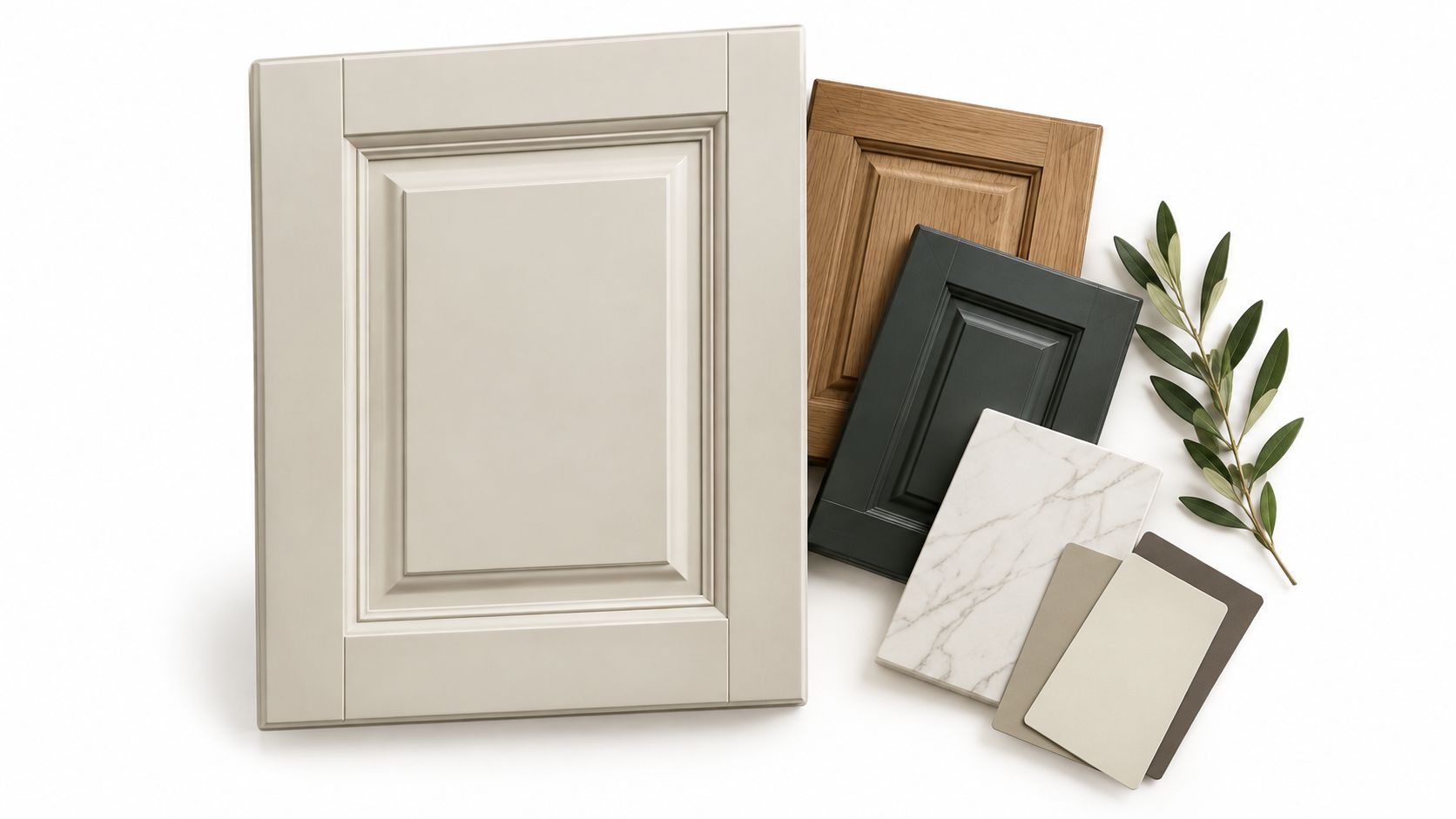
You're standing in a South Jersey kitchen showroom with three cabinet-door samples in your hands. One looks plain, one has a framed center, and one has a shaped center that catches the light. They may seem like small differences on a sample board, but the profile you choose affects the room's character, how you clean the doors, and what materials make sense near a sink or appliance.
A raised panel cabinet door can suit a traditional kitchen or add depth to a transitional design. The right choice depends on more than its silhouette. Knowing how the door is built, what it's made from, and where it will be installed helps you order cabinetry that fits your home and your expectations for care.
Table of Contents
- What a Raised Panel Cabinet Door Looks Like
- How a Raised Panel Door Is Built
- Raised Panel vs Shaker vs Slab
- Material Choices and What They Change
- Where Raised Panels Work Best in Kitchens and Baths
- Matching Materials to Moisture, Heat, and Repair Reality
- Maintenance, Refinishing, and Lifespan
- Choosing Raised Panels for Your Renovation
What a Raised Panel Cabinet Door Looks Like
Start with the frame. The two vertical pieces at the sides are the stiles; the horizontal pieces at the top and bottom are the rails. Inside them sits the center panel. On a raised panel door, that panel's middle projects forward, while its edges angle or curve down toward the frame. That change in surface creates a visible outline and a line of shadow.
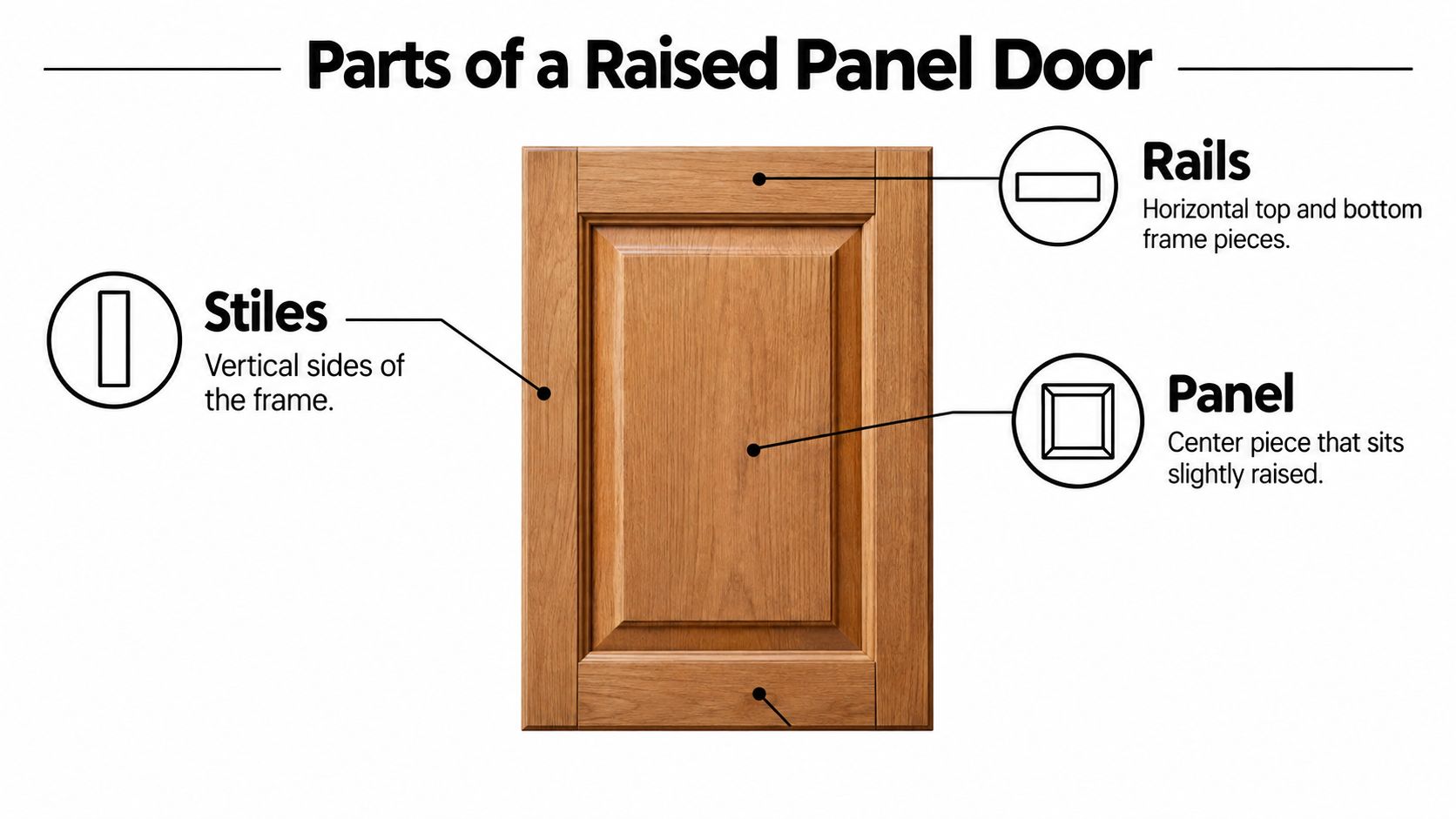
On a Shaker door, the center panel is recessed and usually plain. A slab door is simpler still: one flat face without rails, stiles, or a separate center panel. If you're looking at a sample, run your eyes from the center toward the frame. A raised center with a shaped perimeter is the feature that makes the door read as raised panel.
The amount of shaping varies. A modest bevel gives the door a restrained, transitional look; a more sculpted profile adds a formal, furniture-like quality. Wood grain, paint color, and hardware change the overall impression, but the center panel's contour remains the defining feature.
That vocabulary helps in a showroom, at home with samples, or during a video design conversation. If you'd like to see how traditional furniture details work together, browse traditional style furniture for examples of the broader visual language.
How a Raised Panel Door Is Built
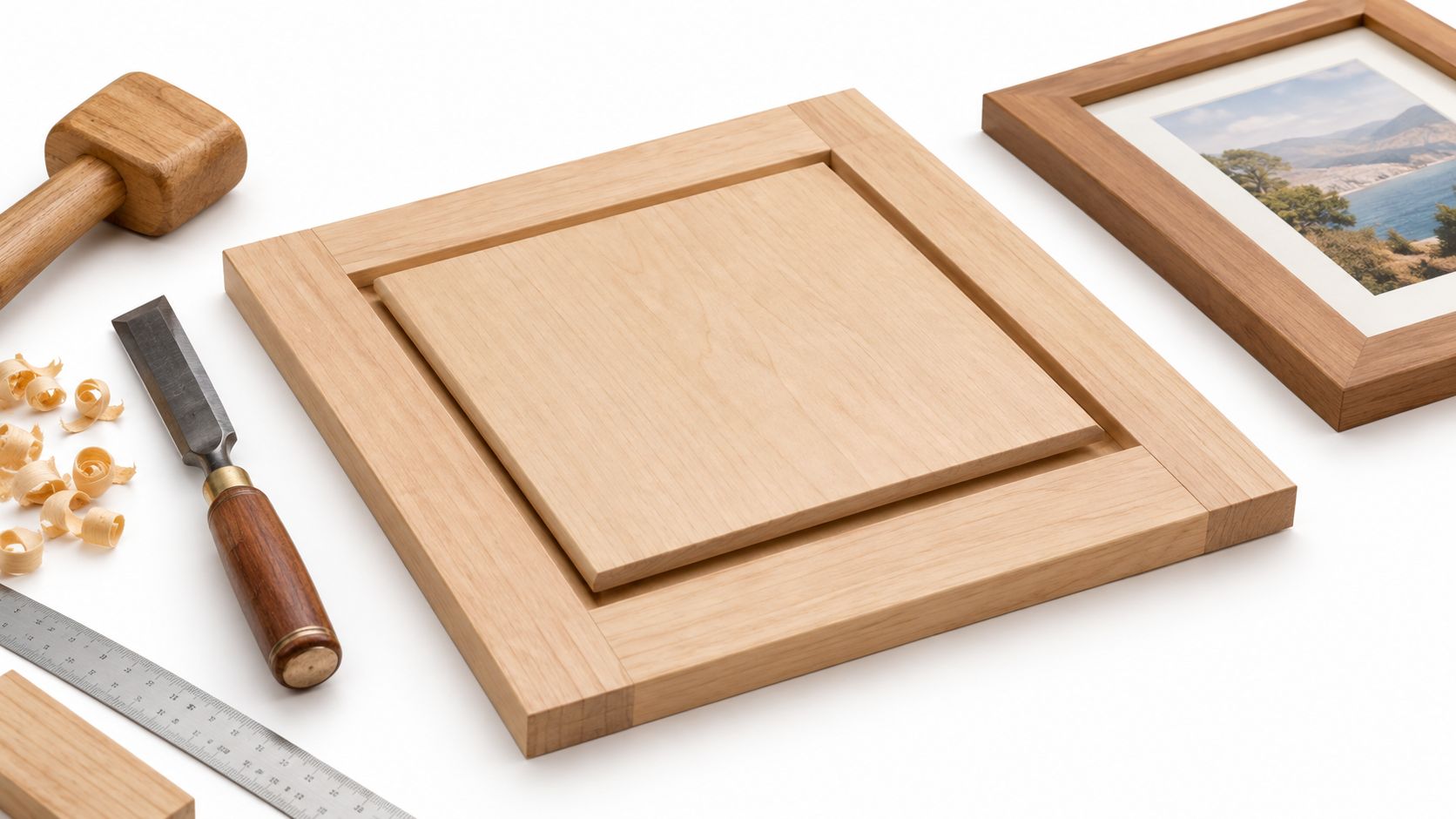
Think of a raised panel door as a picture frame with a center that's allowed to move. The rails and stiles form the frame, and grooves along their inner edges hold the panel in place. In a well-made door, the panel is captured rather than rigidly glued across its full width.
That difference matters because wood responds to humidity. It expands and contracts much more across the grain than along it. If a wide solid-wood panel is glued firmly into the frame, seasonal movement can put stress on the panel and joints. A floating panel has room to shift, reducing the chance of splits, open joints, or cracks showing through the finish. Woodworking guidance gives a practical movement range of about 1/8 to 1/4 inch per foot of panel width for seasoned plainsawn domestic hardwoods, depending on conditions and material (frame-and-panel construction guidance).
How the raised profile takes shape
The maker shapes the panel's perimeter to create the raised field. Modern production commonly uses router tooling, with large panel-raising bits typically about 3–4 inches in diameter. Multiple light passes help form the profile consistently and reduce tear-out (historic cabinetry and raised-panel construction).
When a fabricator says the panel is “floating” or “captured,” ask how much clearance the construction allows and whether the panel is glued. Those terms describe a construction detail you can verify, not a decorative feature. For a broader look at planning cabinetry changes, cabinet upgrade tips for homeowners can help you think through how new doors relate to existing storage.
Raised Panel vs Shaker vs Slab
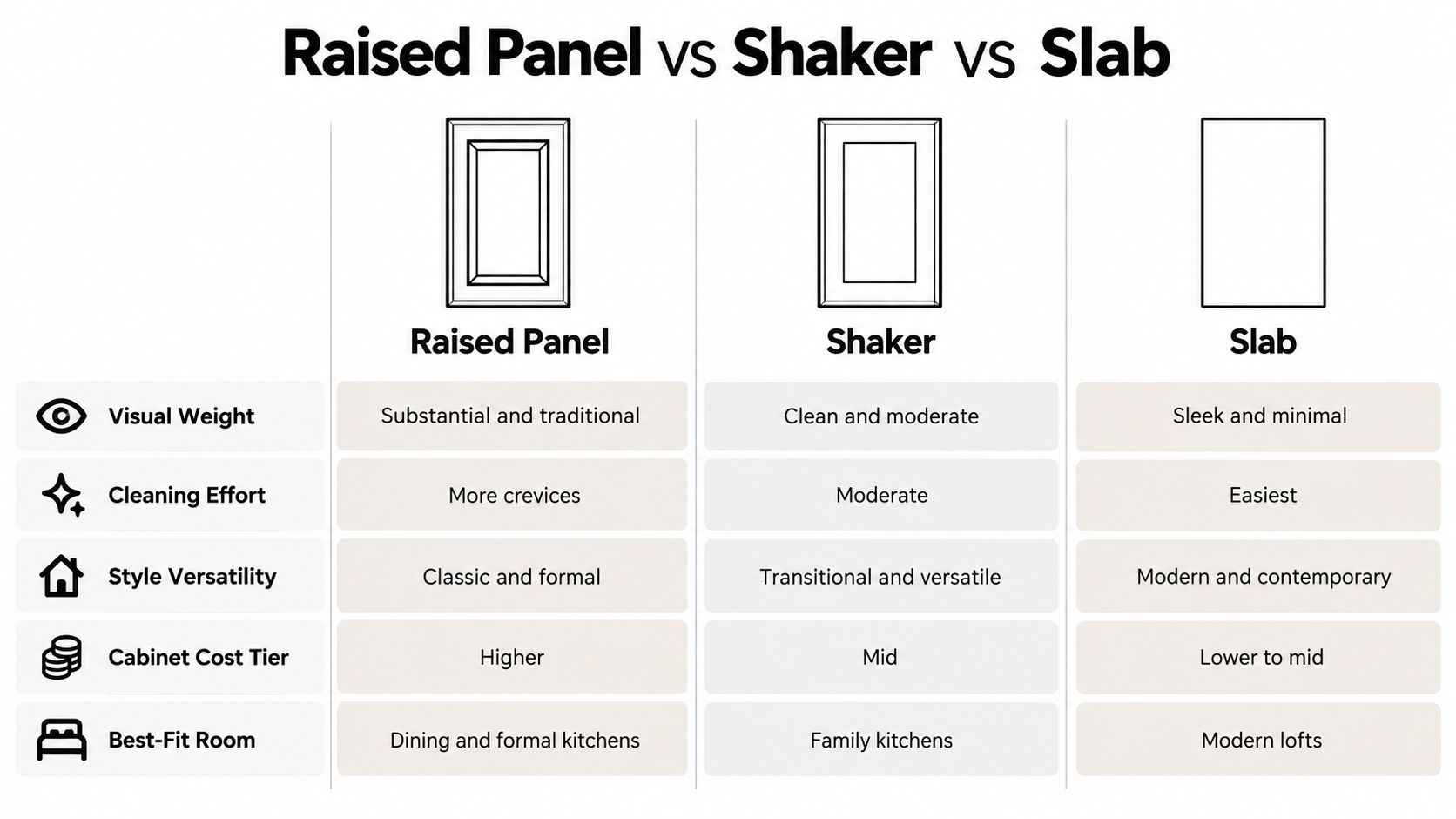
The three styles solve different design problems. Raised panel adds depth and formality; Shaker offers a framed look with fewer contours; slab keeps the face smooth and spare. Cleaning follows the same visual pattern: more grooves mean more places where dust and cooking residue can settle.
| Style | Visual Weight | Cleaning Effort | Style Fit | Cost Tier | Best-Fit Room |
|---|---|---|---|---|---|
| Raised panel | Substantial and traditional | More detail to wipe | Classic, formal, or transitional | Higher | Traditional or furniture-style kitchen |
| Shaker | Clean and moderate | Moderate | Broadly versatile | Mid | Family kitchen or transitional space |
| Slab | Sleek and minimal | Easiest | Modern and contemporary | Lower to mid | Streamlined kitchen or modern loft |
Raised panel earns its place when the kitchen already has architectural detail, such as substantial molding, a furniture-style island, or a traditional finish. It can also give a transitional room a more grounded focal point, provided the surrounding choices aren't overly ornate. In a small room, a pronounced profile may feel visually busy, so compare a sample against your cabinet color and backsplash rather than judging it alone.
Shaker is a practical middle ground when you want a framed door that can sit comfortably among varied styles. Its simple recess is easier to wipe than a more sculpted profile, while still giving the cabinet face dimension. Slab suits a contemporary scheme or a project where a smooth face and straightforward cleaning matter most. For additional style examples, explore cabinet door styles.
A quick visual comparison can also help you distinguish the three silhouettes before you settle on samples.
Material Choices and What They Change
A raised profile can be made from different substrates, and the substrate changes how the door responds to humidity, heat, and repairs. The quote should identify the material and surface system, not just call the door “raised panel.”
Solid wood brings natural grain and can often be refinished, which helps when a high-touch door gets scratched or its finish wears. It also moves seasonally. The frame-and-panel design needs to leave the center panel room to move, and paint won't stop that movement.
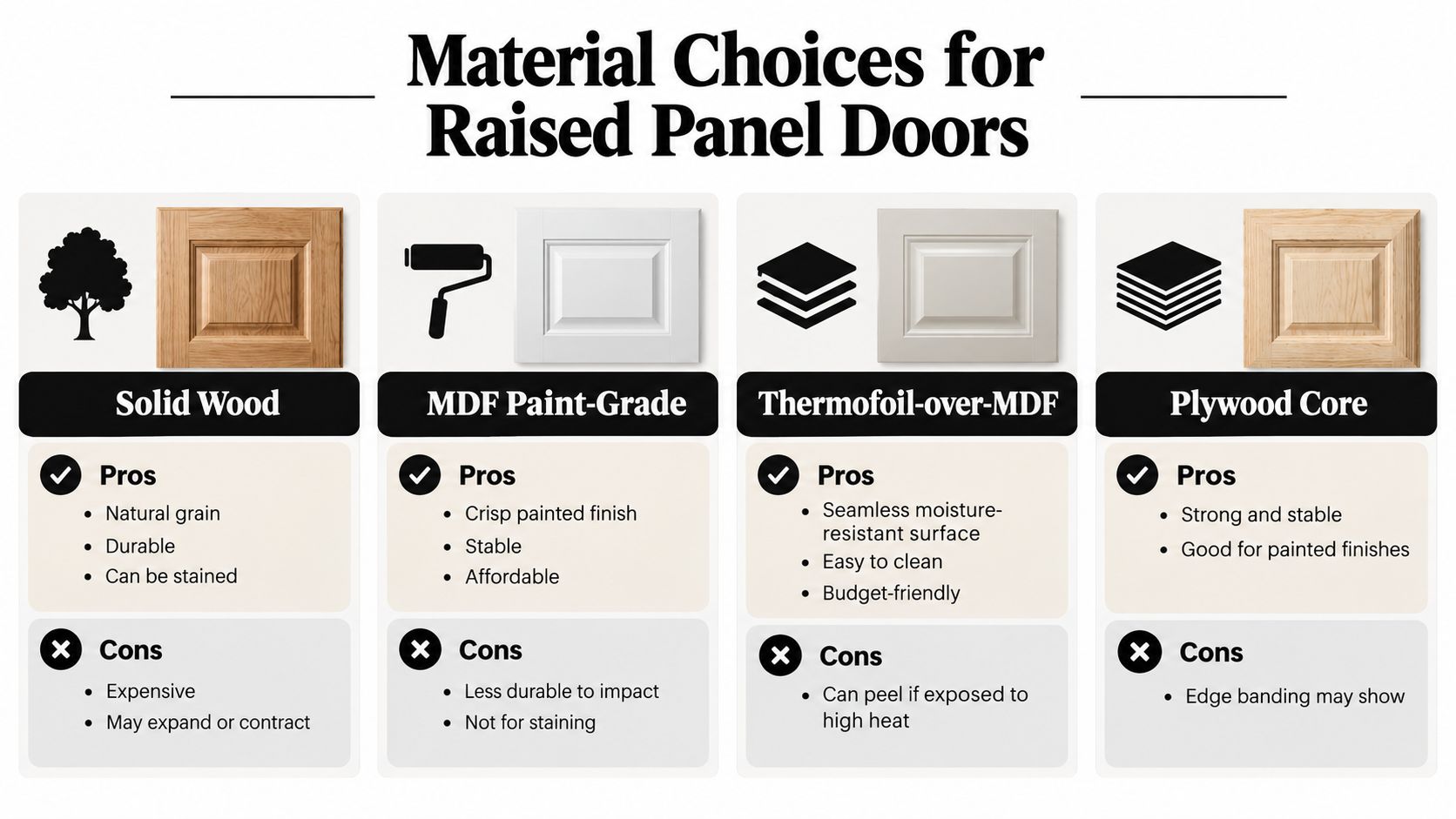
Paint-grade MDF provides a uniform surface and can be routed into a crisp raised profile. It's a common fit for painted doors where visible wood grain isn't wanted. Its weakness is prolonged water exposure: after a leak, MDF can swell, and damage can be difficult to repair invisibly.
Thermofoil-over-MDF uses a heated PVC film formed over a routed MDF door. The continuous skin is easy to wipe and resists ordinary surface moisture while intact. But sustained heat, including heat or steam from nearby appliances, can weaken adhesion and lift film at edges or corners. Check manufacturer clearances and ventilation instructions before placing it by an oven, toaster, or dishwasher.
Wood-veneered MDF offers a wood face over a more uniform core. It can provide a wood appearance without using solid wood throughout, but the specific veneer, edges, and finish determine how it handles wear and repairs. If you're comparing species for a natural-wood look, this guide to oak or maple for your home can help frame the choice.
Ask the supplier to list the substrate, surface system, edge treatment, appliance-adjacency limits, and warranty terms. For a side-by-side look at door construction options, see MDF versus wood cabinet doors. A material name alone doesn't tell you how a door will perform in its installed location.
Where Raised Panels Work Best in Kitchens and Baths
Raised panels often feel at home in traditional kitchens, where the cabinet doors can echo detailed trim, a furniture-style island, or other classic elements. They can also work in a transitional kitchen when the profile is restrained and the rest of the room stays visually simple. If you're comparing the overall look with other classic cabinetry, traditional cabinet designs offer useful reference points.
A bathroom vanity can take a raised-panel door, especially when its finish and surrounding materials support the style. The smaller scale of a vanity makes the door detail noticeable without requiring the whole room to feel formal. In a compact bath, use a simpler profile or a lighter finish if a deep contour would crowd the visual field.
The installation zone matters as much as the room. A sink base faces splashes and the possibility of a leak, so choose construction that fits your repair expectations and respond quickly to water. A pantry or a cabinet away from plumbing and heat has fewer exposure concerns, making it easier to prioritize appearance.
Placement check: Treat cabinets beside a wall oven or cooktop, and doors above a dishwasher's steam vent, as material-specific decisions. Confirm the manufacturer's heat and ventilation requirements before selecting the finish.
A raised panel range hood can make a kitchen feel coordinated, but its placement near heat calls for careful specification. Don't assume that a door material suitable for a vanity will be suitable beside cooking equipment. In small bathrooms, consider ventilation and water exposure together: the door style can stay, but the substrate and finish must match the conditions.
Matching Materials to Moisture, Heat, and Repair Reality
A door's care plan should match the place it hangs. The sink base is not the same environment as a pantry, and a vanity beside a shower faces a different moisture pattern than a cabinet across the room. Use this matrix to turn those differences into questions for your designer or supplier.
| Location Zone | Recommended Material | Key Risk | Care Routine |
|---|---|---|---|
| Kitchen sink base | Solid wood or sealed veneer when repairability matters | Splashes, leaks, swelling, or finish damage | Wipe water promptly; inspect panel edges and joints |
| Wall pantry away from heat | Solid wood, MDF-painted, or thermofoil, based on finish preference | Dust in profiles; surface wear from frequent handling | Brush grooves and wipe the face with a suitable cleaner |
| Bathroom vanity away from direct splash | Painted MDF or thermofoil, if the area stays ventilated and dry | Sustained water exposure or finish changes | Wipe splashes; check seams and finish for blushing or swelling |
| Cabinet near oven or dishwasher steam | Material approved for the appliance location | Heat-related adhesion failure or edge separation | Follow clearance requirements; inspect edges for lifting |
Raised profiles do need detail wiping, but that doesn't mean every door needs the same routine. A soft brush can loosen dust and crumbs from the contours; follow with a cloth suited to the finish. A flat door is faster to wipe because it has fewer recesses, while a profiled door benefits from attention along its inside edges. Ask which cleaner the finish manufacturer permits rather than using an abrasive product by habit.
Match the routine to the room
In the kitchen, brush the door profiles periodically and pay special attention to doors near cooking and cleanup zones. In a bathroom, check for finish blushing, panel-seam changes, or swelling, especially where ventilation is limited. Under sinks, act on leaks quickly; a durable finish isn't a substitute for keeping the cabinet dry.
Solid wood or a properly sealed veneer may suit a high-touch area where repair matters. Painted MDF can provide a smooth, consistent look in a lower-splash location, but water exposure needs prompt attention. Thermofoil can be practical in a pantry or other low-heat location, while appliance clearances determine whether it's appropriate near heat. For more context on wood choices, review kitchen cabinet wood types.
Maintenance, Refinishing, and Lifespan
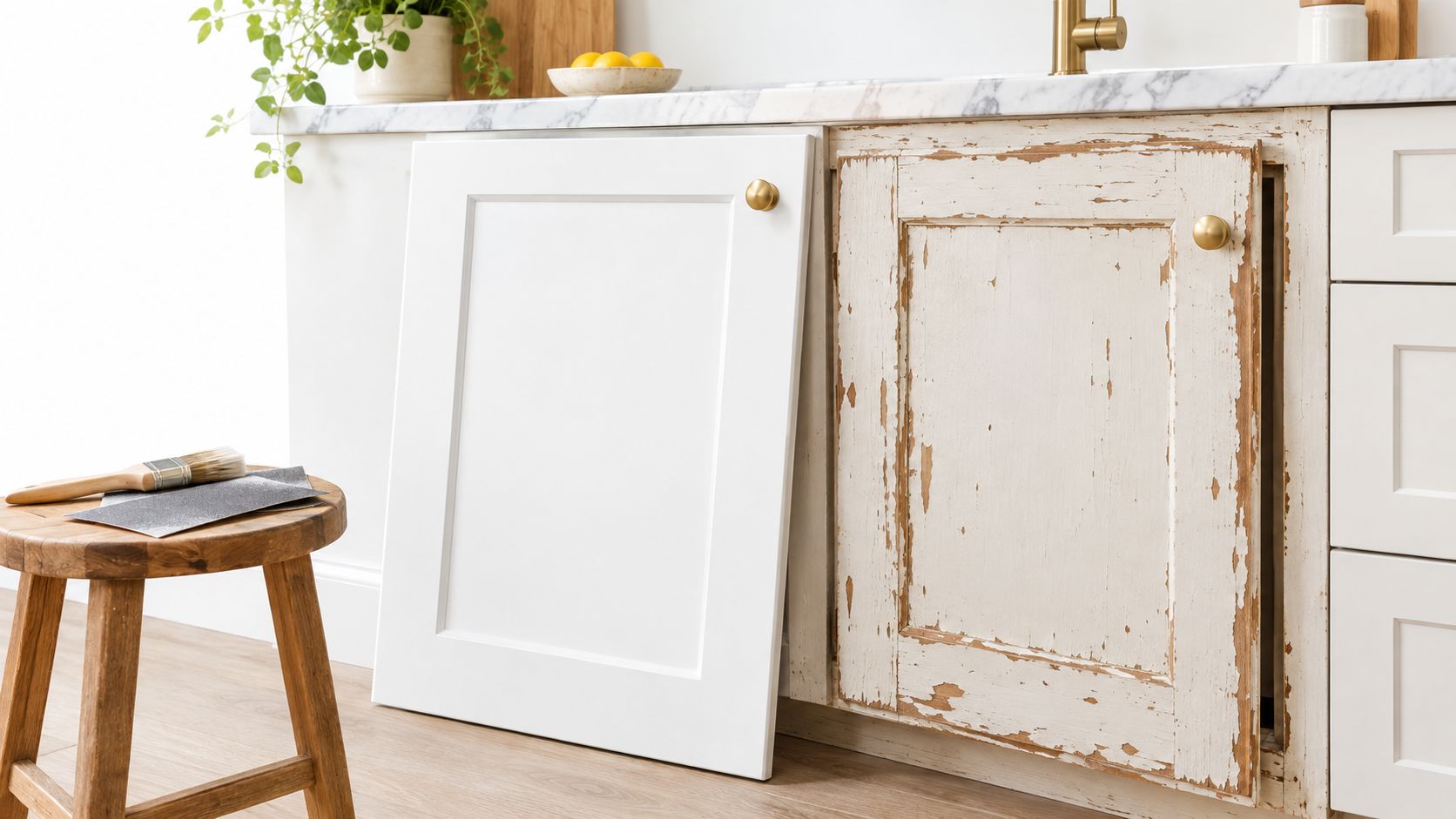
Long-term ownership depends on what the surface can withstand and how it can be repaired. Solid wood can often be refinished, which may help a door recover from wear rather than forcing a full replacement. A painted MDF door can look crisp, but a damaged area may be hard to blend invisibly. Thermofoil can't be refinished like wood; if the film separates or fails, replacement is usually the practical route.
That doesn't make one material right for every home. A household that values a repairable finish may prefer wood, while a family seeking a consistent painted surface may choose MDF and take care to prevent leaks. The better question is whether the door's repair path matches the room's exposure and how you expect to maintain it. For finish options and upkeep, compare guidance on painted and stained cabinets.
What to inspect through the seasons
South Jersey homes experience seasonal changes in indoor humidity, so make a visual check part of routine home care. Look along the panel edges for hairline finish cracks or changes at the joints. In bathrooms, watch for cloudy or blushed finish areas; near sink bases, look for swelling or soft spots. Near appliances, check thermofoil edges and corners for lifting.
A small change at a seam is easier to assess early than after water or heat has affected a wider area.
A door that can be maintained, repaired, or refinished may remain useful longer than a product that needs early replacement. That's a practical sustainability consideration, not a guarantee about the impact of any specific door. If sustainability is part of your buying decision, ask suppliers for substrate details, any recycled or certified content, finish VOC information, formaldehyde-emission compliance documents, and replacement-panel options. Then weigh those details against water performance and repairability, rather than relying on a broad “eco-friendly” label.
Choosing Raised Panels for Your Renovation
Before ordering, make three decisions. First, describe the exposure profile of each cabinet run: a sink base, pantry, bathroom vanity, and range-adjacent door don't face the same moisture or heat. Second, decide how you expect to handle damage. Solid wood may offer a refinishing path; painted MDF may be harder to repair invisibly; thermofoil generally needs replacement if its film fails.
Third, consider how committed you are to a traditional or transitional look. A raised panel door has a defined visual character, so compare a real sample with your cabinet color, countertop, backsplash, and hardware. If you're unsure, ask to see the same finish on a simpler profile as a control. That makes it easier to judge whether you're responding to the door shape or to the color and grain.
Bring these questions to a showroom or design consultation:
- What's the substrate? Ask whether the door is solid wood, MDF, veneer-faced, or thermofoil over MDF.
- How is the center panel held? Confirm that the construction allows for movement where required.
- What's the finish and edge treatment? Ask how exposed edges are protected and what cleaners are safe.
- What appliance clearances apply? Check the manufacturer's instructions near ovens, cooktops, and dishwasher steam.
- What does the warranty cover? Clarify exclusions for water exposure, heat, finish damage, and installation conditions.
- Can an individual door or panel be replaced? Find out whether repairs can be limited to the affected piece.
The Cabinet Coach offers cabinet-style guidance and coordinates cabinetry selections with countertops, hardware, and tile for kitchen and bathroom projects in South Jersey. To compare raised-panel samples against your room's materials and exposure conditions, schedule a complimentary video consultation through The Cabinet Coach.