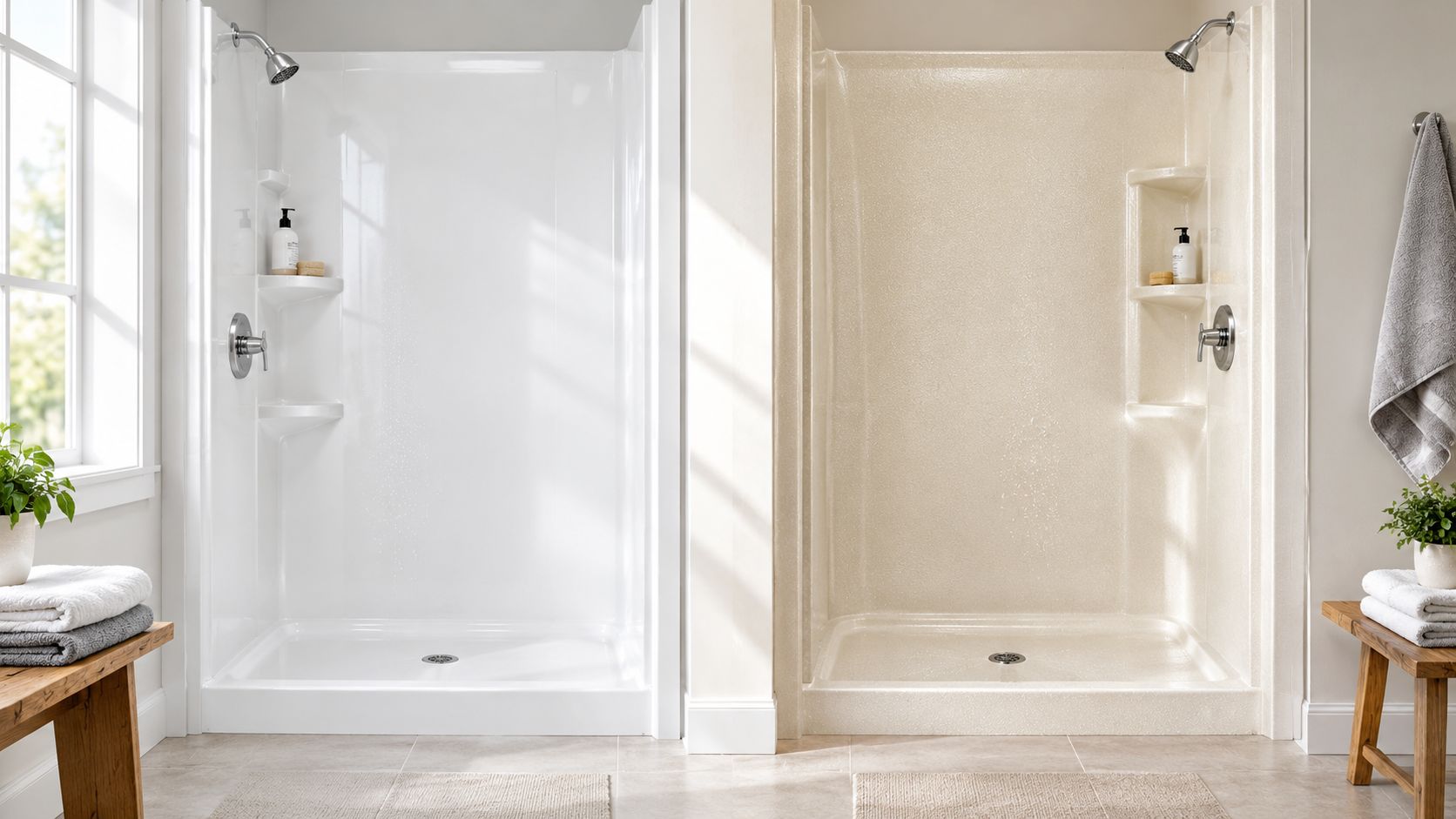
You're comparing two shower quotes for a bathroom you use every day. The fiberglass option looks easier on the budget, while the acrylic system costs more and promises a finish that holds up longer. The choice gets less obvious when you ask what happens if the pan flexes, whether the shower can support future mobility needs, and how hard replacement would be on the tile and flooring around it.
In South Jersey homes, the surface material matters, but it's only part of the decision. A well-supported fiberglass base can serve a rental or lightly used guest bath. A poorly supported acrylic pan can still flex and fail. The better question is which complete system fits your budget, mobility plans, expected use, and tolerance for future disruption.
| Decision point | Acrylic | Fiberglass |
|---|---|---|
| Upfront cost | Usually higher | Usually lower |
| Typical service-life estimate | Approximately 15–25 years | Approximately 10–15 years |
| Visible finish | More consistent color and gloss | Gel coat is more vulnerable to wear and discoloration |
| Best fit | Long-term primary bath or design flexibility | Budget-focused projects with controlled installation |
These service-life ranges are estimates, not promises. Support, installation, cleaning products, water chemistry, and use all affect how a shower ages. The right choice is not the cheaper unit or the longest estimate. It's the system that works for your bathroom and the way you expect to use it.
Table of Contents
- The Decision Most South Jersey Homeowners Get Wrong
- How Each Shower Is Actually Built
- Cost, Lifespan, and Maintenance Side by Side
- Accessibility and Aging in Place Change the Answer
- What Happens When Something Fails
- Which Material Wins for Your Situation
- What to Ask Your Installer Before You Sign
- Questions South Jersey Homeowners Ask Before They Choose
The Decision Most South Jersey Homeowners Get Wrong
A Cherry Hill homeowner refreshing a primary bathroom may receive two proposals that appear to solve the same problem. One specifies a fiberglass shower as a quick, lower-cost replacement. The other recommends acrylic, with a higher installation estimate and more flexibility in appearance. If the homeowner compares only those totals, fiberglass can look like the obvious winner.
That comparison leaves out the parts that tend to matter after the crew leaves. How long do you plan to stay? Will the shower be used daily by several people, or occasionally by guests? Does anyone in the household need a low threshold now, or might that become important later? And if the pan cracks or a wall panel needs replacement, can the work be done without disturbing the finished floor or nearby cabinetry?
I've seen both materials succeed and fail. The failures aren't explained by the label alone. Fiberglass's gel-coat finish can become scratched, dull, or discolored, while an acrylic shower can still develop trouble if its base lacks proper support. Installation quality and the construction behind the visible surface deserve at least as much attention as the product name.
Start with the years ahead, not the showroom
For a homeowner who expects to stay in the house and use the shower every day, a longer-lasting, better-supported system is usually the sounder investment. Acrylic often makes more sense in that situation because its finish tends to retain its appearance more consistently and its expected service life is longer. If the bathroom is a basic rental refresh or a guest bath with limited use, a properly installed fiberglass unit may be a rational way to control upfront spending.
Accessibility changes the calculation, too. A standard molded enclosure may not suit a low-threshold or curbless design, regardless of whether it's acrylic or fiberglass. Before choosing a surface, decide what the shower needs to do: accommodate a seat, allow easier entry, fit grab bars, or make room for a handheld showerhead.
Advisor's view: Don't approve a shower based on a material label and a price alone. Ask what the whole system will look like when it's installed, how it will be supported, and what would need to come out if it fails.
How Each Shower Is Actually Built
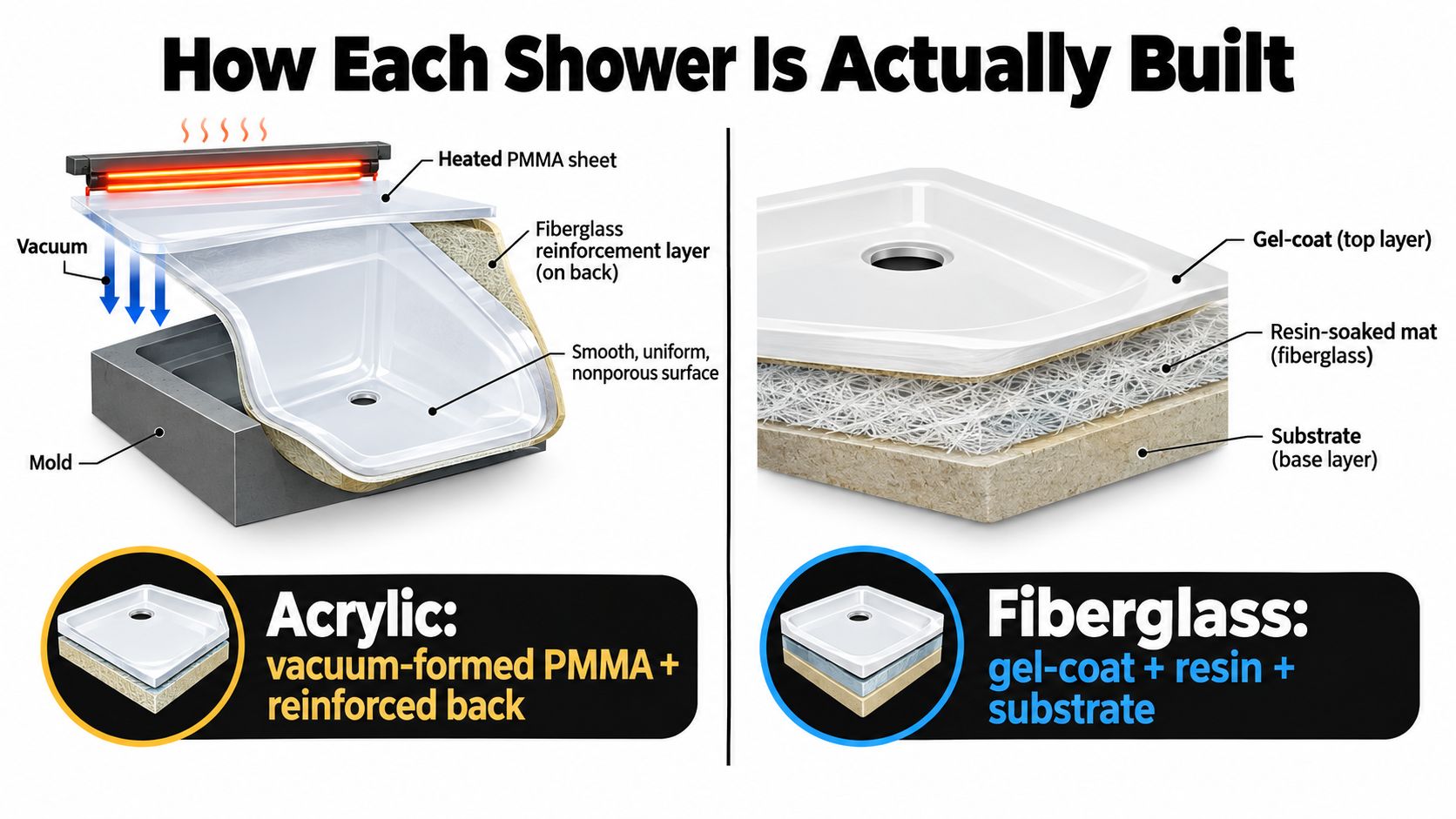
An acrylic shower starts with a heated sheet of PMMA, a type of plastic. The manufacturer vacuum-forms that sheet into the shower shape, then reinforces the back with fiberglass, resin, or structural foam. What you see and touch is a uniform, nonporous surface rather than a thin decorative coating over a different-looking layer.
A fiberglass shower is built differently. Its body commonly uses fiberglass reinforcement beneath resin, with a separate gel-coat finish forming the visible surface. That outer layer supplies the color and gloss, but it's also the part exposed to scrubbing, dropped bottles, and daily wear. Once the gel coat is scratched or worn, the finish can become harder to keep looking bright.
Why the shower pan deserves special attention
The floor takes repeated foot traffic and weight. If the base flexes because it isn't properly supported, stress can build around vulnerable points such as the drain or corners. A sturdy surface can't make up for a poorly prepared subfloor or an installation that leaves parts of the pan unsupported.
Ask the installer what the unit is made of, how it's reinforced, and how the base will be supported. The answer should describe the specific product and installation method, not promise that the material is durable. A mortar bed or a manufacturer-approved support system may be appropriate, depending on the unit and the manufacturer's instructions.
Practical rule: The material determines how the visible surface is made. The support beneath the pan helps determine whether it stays stable underfoot.
That distinction matters whether the project involves a molded enclosure or a tiled shower. If you're weighing a panel system against tile, compare the complete wall assembly, waterproofing, maintenance, and finish choices in this bathroom tile remodeling guide. Don't assume that a product's surface material alone settles the question.
Cost, Lifespan, and Maintenance Side by Side
Acrylic generally costs more to install than an equivalent fiberglass system. Comparative estimates place the premium at about 20–40%, although local labor, shower size, wall configuration, accessibility features, and subfloor preparation can change the final price. The useful comparison is therefore not just the material quote. It's the initial cost weighed against expected replacement timing, maintenance, and the disruption of future work.
| Criterion | Acrylic | Fiberglass |
|---|---|---|
| Installation cost | Often about 20–40% more than an equivalent fiberglass system | Usually lower upfront |
| Typical service-life estimate | Approximately 15–25 years | Approximately 10–15 years |
| Finish retention | Uniform, nonporous visible surface generally retains color and gloss more consistently | Gel-coat surface can scratch, fade, discolor, and wear |
| Cleaning | Mild, nonabrasive products are generally suitable | Worn gel coat can be harder to keep bright and may show stains or scratches |
| Weight | Both are lightweight molded options compared with heavier traditional materials | Both are lightweight molded options compared with heavier traditional materials |
The lifespan figures are practical estimates, not guarantees. Some industry sources place fiberglass repair or refinishing needs at approximately 5–7 years, but that isn't a universal schedule or a warranty promise. Installation, care, use, and the condition of the base all influence how long a unit remains serviceable. The estimates and cost comparison are summarized in this acrylic and fiberglass cost-and-lifespan overview.
Acrylic earns its higher price when you value a more consistent finish and want to put off replacement. Its nonporous visible surface is generally cleaned with mild, nonabrasive products. That's a practical advantage for a busy primary bath, particularly if the household wants to avoid harsh scrubbing that could damage a finish.
Fiberglass wins when the initial budget is the binding constraint. It can be a reasonable choice in a rental or low-use guest bath, provided the base is rigidly supported and the homeowner understands that its gel coat may show wear sooner. For a broader view of the variables that shape a renovation estimate, use this bathroom remodel cost breakdown.
Lifecycle test: A lower quote is only a saving if it still makes sense after you account for the next repair, refinishing, or replacement.
Accessibility and Aging in Place Change the Answer
If easier entry or future mobility matters, settle the layout before selecting the shower material. Houzz's 2026 U.S. Bathroom Trends Study reports that accessibility or universal design was a major factor for 40% of renovating homeowners; 55% selected low-curb showers and 32% chose curbless showers. Those choices put the design of the shower base and its support ahead of a simple acrylic-versus-fiberglass comparison. (Houzz's 2026 bathroom trends study)
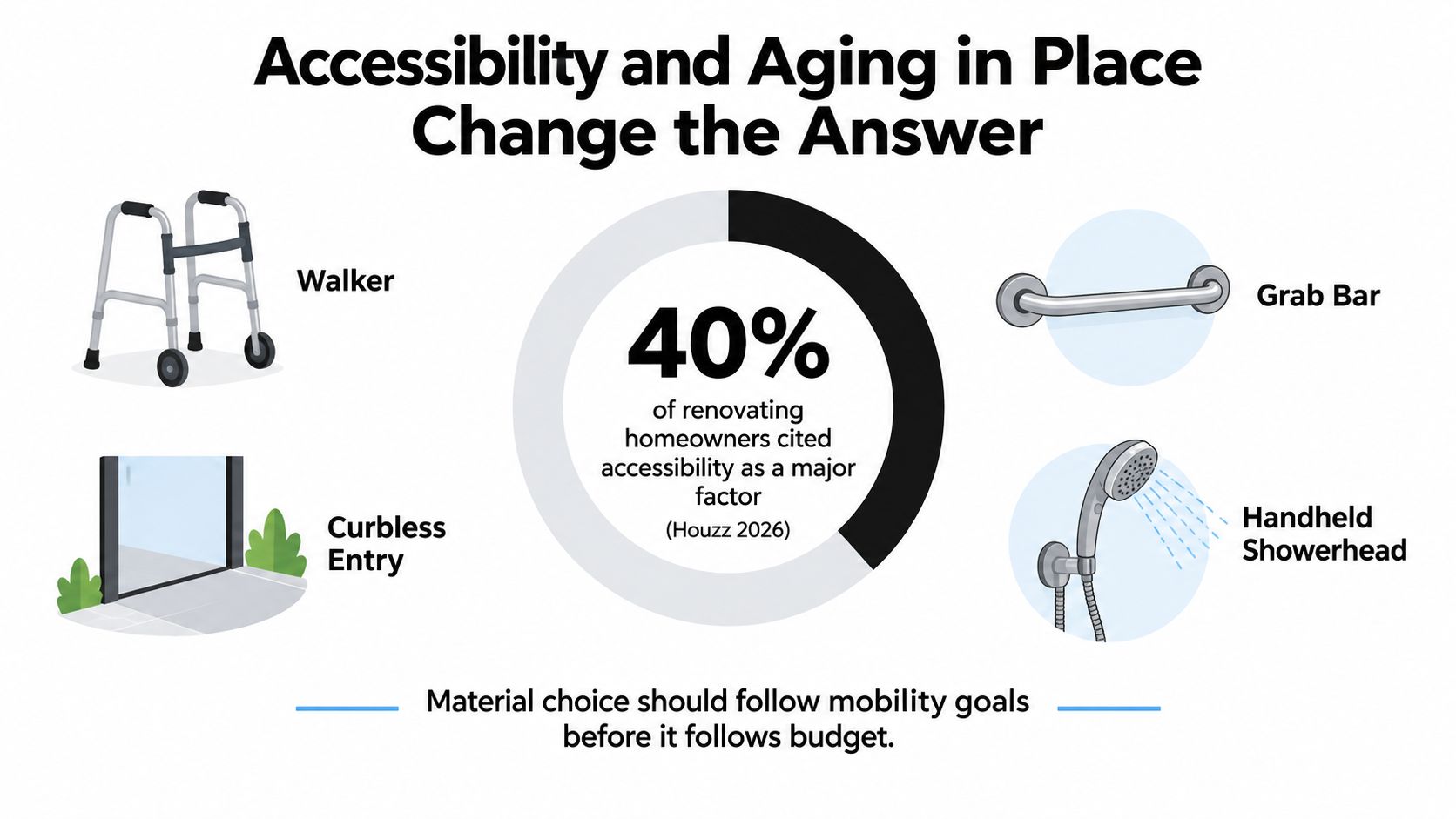
A low-threshold shower still needs a stable base and a carefully planned entry. A curbless shower asks more of the entire assembly, including floor structure, drainage, waterproofing, and transitions to the bathroom floor. A standard molded enclosure may not offer the dimensions or configuration needed for that work. Acrylic isn't automatically suitable just because it's the longer-lived option, and fiberglass isn't automatically unsuitable if the specific unit and installation can meet the design requirements.
Design for mobility, then specify materials
Start by identifying how someone enters and uses the shower. Consider whether you need space for a built-in seat, room for a caregiver, a handheld showerhead, grab bars, or a low-threshold entry. If grab bars may be needed, ask where blocking or other structural reinforcement will go before the walls are closed.
Then confirm that the selected system supports the plan. A molded pan must match the intended layout and have the required support underneath. A site-built accessible shower may be more appropriate when a standard enclosure can't provide the slope, drain location, dimensions, or entry needed. The choice depends on the full build, not a general claim about either material.
If the project involves removing a tub to create an easier-entry shower, the tub-to-shower conversion guide can help you frame the layout questions before comparing products. Ask your contractor to explain how the threshold, drain, blocking, and waterproofing will work together. When accessibility is a core goal, choose the system that meets it reliably, even if it isn't the cheapest molded option.
What Happens When Something Fails
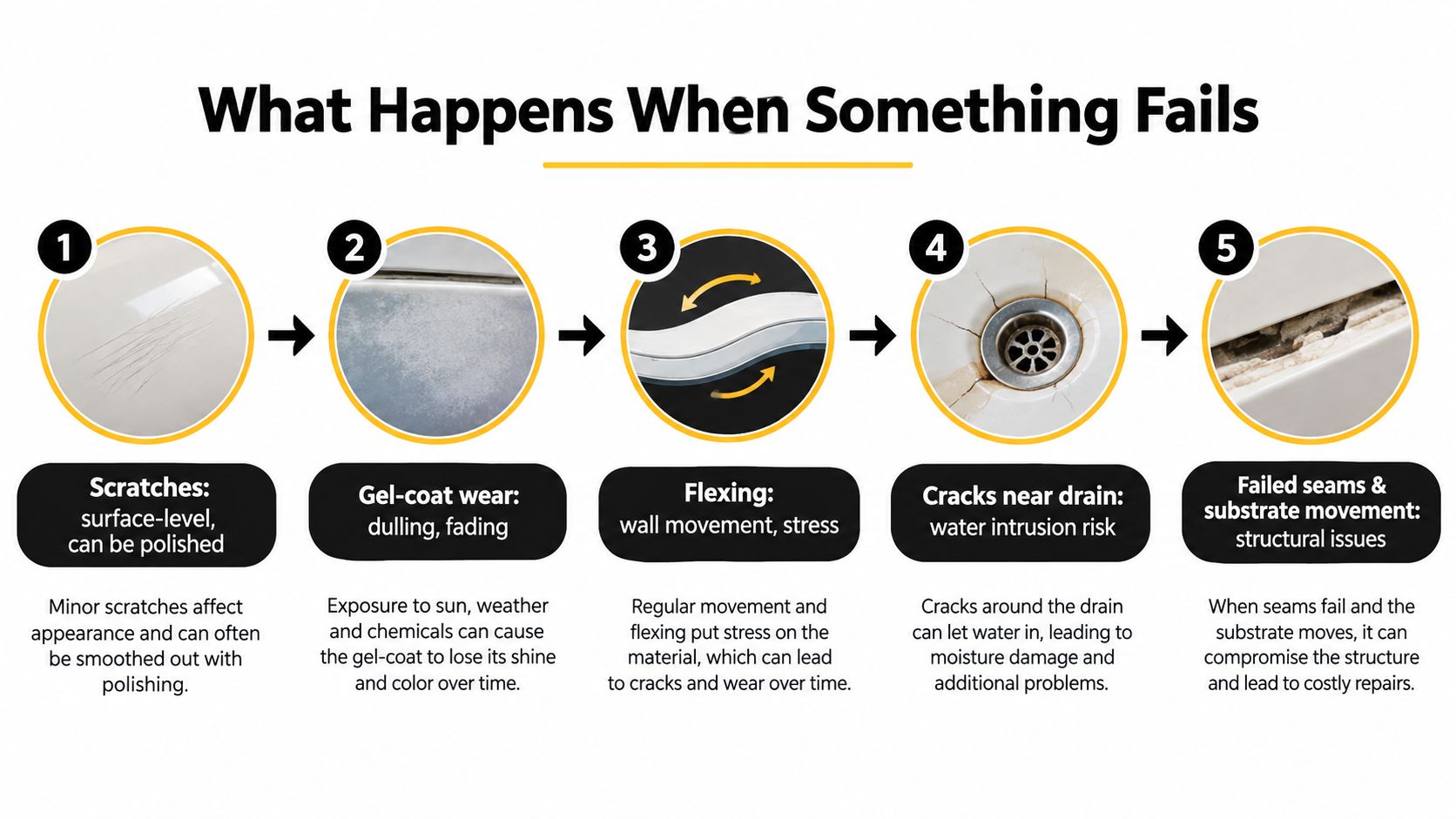
A shower problem isn't always a reason for a full replacement. A surface scratch may be localized. Gel-coat wear can affect the appearance without proving that the base has failed. Flexing, cracks near the drain, failed seams, or movement in the supporting structure call for a closer look because the underlying cause may be more serious than the visible mark.
Repair logistics matter because showers sit among finished surfaces. A pan-only replacement may sound contained, but the installer may need to remove trim, wall panels, adhesives, or wet-area backing to reach and reconnect it. If the shower shares an edge with finished flooring or cabinetry, that work can put adjacent finishes at risk.
Four repair scenarios to discuss before installation
- Localized surface repair: A limited scratch or small finish defect may be repairable without replacing the whole unit. Ask what repair method the manufacturer allows and whether the finished area will remain visible.
- Color matching: Replacing one panel or repairing a patch can leave a mismatch. Confirm whether a matching component is available and what the repair will look like under the bathroom's lighting.
- Pan-only replacement: This is only a practical plan if the base can be removed and replaced without compromising the walls, waterproofing, drain connection, or nearby flooring. Ask the installer to explain the sequence, not just say it can be done.
- Full tear-out: A cracked base or damaged backing may require removal of surrounding panels and trim. That can widen the job into adjacent finishes and turn a simple shower replacement into a larger bathroom repair.
The stakes can rise when the shower footprint changes. Houzz reported that 49% of renovating homeowners enlarged their shower in its 2026 study, up 10 percentage points year over year. (Houzz's shower-size trend summary) A larger shower may improve comfort, but it also makes the pan, support, access, and replacement plan more important to get right from the start.
Ask for a failure-scenario explanation while the quote is still being prepared. Where is the plumbing access? Can the pan be replaced independently? Which adjacent surfaces would need to be removed? A contractor who can answer those questions clearly is helping you judge more than the product's appearance.
Which Material Wins for Your Situation
For a long-term primary-bath owner, acrylic is the stronger recommendation. Its visible surface generally holds color and gloss more consistently, and its typical service-life estimate is longer than fiberglass's. Specify the backing and pan support, because a premium surface won't rescue a base that flexes.
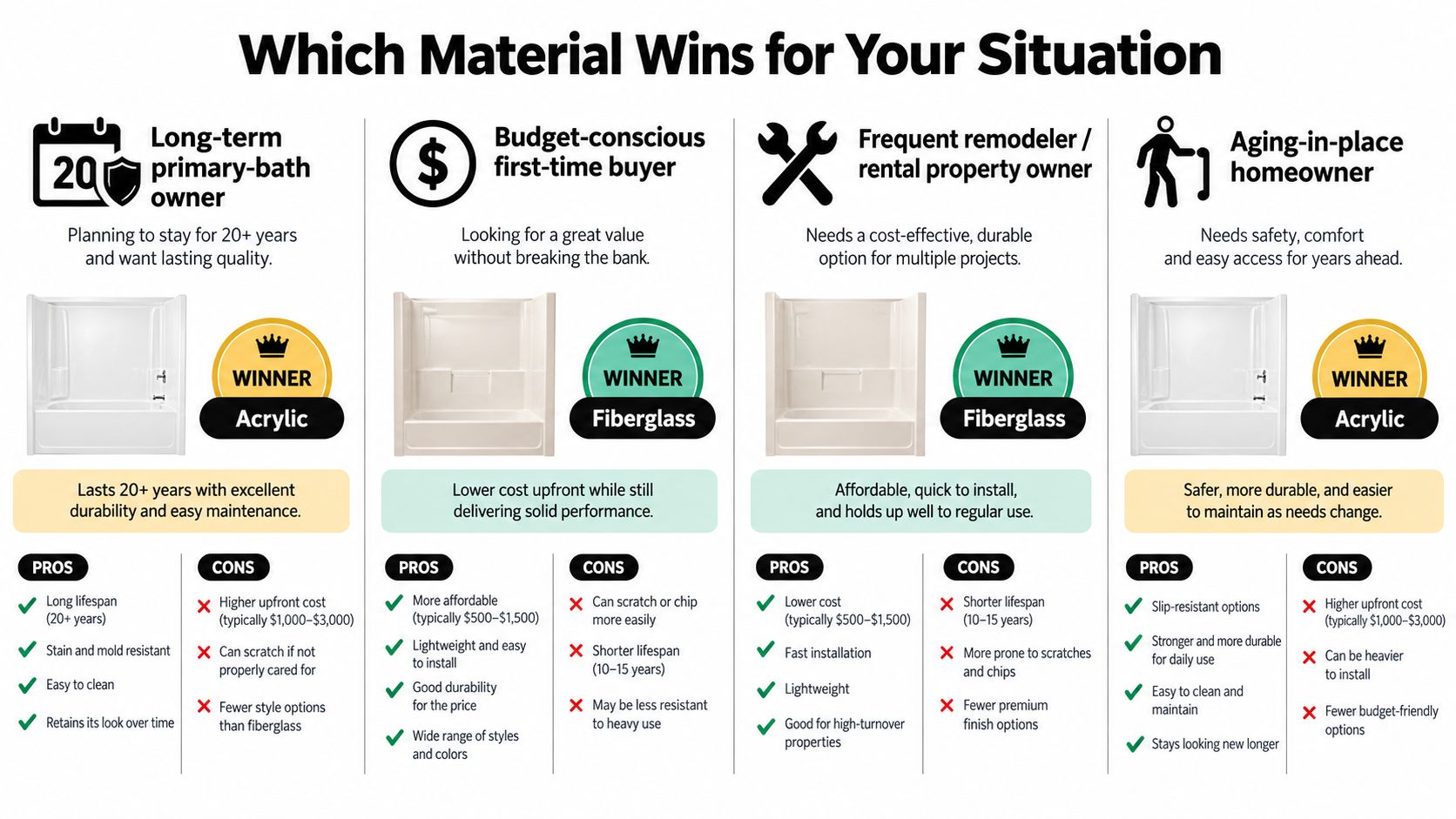
For a rental property or quick resale refresh, fiberglass can win when upfront cost is the priority and the unit is likely to see limited use before the next renovation. Don't use the lower price to justify a weak installation. Confirm the pan support and protect the gel coat with suitable cleaning practices.
For an accessibility retrofit, don't select either material until the layout is resolved. If the project uses a suitable molded low-threshold system, acrylic is often the better long-term fit for a primary bathroom. If the design requires a custom curbless pan, choose the assembly that meets the structural, drainage, and waterproofing requirements, whether that means a site-built system rather than a standard acrylic or fiberglass enclosure.
For a budget quick refresh in a guest bath, fiberglass is a defensible choice. Lower traffic can make the finish's shorter expected service life less consequential, but proper support remains essential. If you're considering fiberglass for another part of the home, this overview of fiberglass door durability in Texas heat offers a separate look at how a fiberglass product's performance depends on its application.
For the shower floor itself, compare the substrate, surface, and installation method before choosing a style. This guide to shower floor options can help you discuss what will work with your layout.
The short answer: Choose acrylic for a primary bath you plan to keep. Choose fiberglass when the upfront budget matters more than finish longevity, and choose neither by label alone for an accessibility build.
What to Ask Your Installer Before You Sign
Don't accept “it's an acrylic shower” or “it's a fiberglass base” as a complete specification. Ask what model is being installed, how it's built, and how the contractor will support it. The answers should match the product instructions and your bathroom's conditions.
Bring these questions to the estimate review:
- What is the visible material and construction? Ask whether the acrylic is a formed sheet or whether the fiberglass unit has a separate gel-coat surface.
- How is the unit reinforced? Have the installer identify the backing and explain how it supports the walls and base.
- How will the pan be supported? Ask whether the plan uses a fully supported mortar bed or a manufacturer-approved base system. Get the method in the written scope.
- How will you prevent movement? Ask what the installer will do to make sure the subfloor and pan remain stable. A flexible or poorly supported base can fail regardless of its material.
- How does this fit the accessibility plan? Confirm the entry, seat, blocking, grab-bar locations, and drainage before the work begins.
- What happens if a component needs repair? Ask whether the pan can be replaced separately and what must be removed to access it.
The bathroom also needs to work as a room, not just as a shower. Tile, cabinetry, countertops, hardware, and the shower finish should be selected as a coordinated set, especially when the project changes the room layout. If you want a contractor who can coordinate those decisions alongside the shower specification, review this guide to bathroom renovation contractors near you.
Questions South Jersey Homeowners Ask Before They Choose
Is a fiberglass gel-coat warranty enough to rely on? No. Read what the warranty covers and what it excludes. A warranty doesn't prevent ordinary finish wear or compensate for a poorly supported pan.
Can either material be used for a curbless retrofit? Sometimes, but don't assume a standard molded unit will work. Have the installer confirm the base, drainage, structure, and waterproofing as one system.
Should I refinish fiberglass or replace it? Refinish when the damage is limited and the underlying base is sound. Replace it when cracks, flexing, or broader deterioration point to a support or structural problem.
Will buyers in Cherry Hill or Moorestown care which material I chose? They're more likely to notice whether the shower looks clean, functions well, and suits the bathroom than to recognize the material. For a coordinated kitchen-and-bath plan, contact The Cabinet Coach.
The Cabinet Coach brings a mobile showroom and personalized design guidance to South Jersey homeowners planning bathroom and kitchen renovations, with help coordinating cabinetry, countertops, hardware, and tile. If you're weighing a shower replacement alongside the rest of your bathroom, visit The Cabinet Coach to discuss a coordinated plan for your home.